
The Art of Landscape Lighting: Designing Evenings Worth Savoring
|
Spring means longer daylight, open windows, and the return of evenings spent outdoors. Well-designed landscape lighting extends that experience well past sunset, giving the night the same intention and clarity as the day.
Placed with purpose, lighting sets the tone, draws attention to architectural detail and plantings, and turns a familiar property into a refined setting once the sun goes down.
Curious to discover your unique lighting style? Take our Landscape Lighting Profile Quiz >>
Why The Right Landscape Lighting Changes Everything
During the day, your landscape is defined by color, texture, and structure. At night, it is defined by contrast and shadow.
With well-designed lighting, you can:
- Draw attention to architectural details that disappear after dark
- Create dimension by layering light at different heights
- Improve visibility on walkways and steps
- Extend the functional use of patios, decks, and seating areas
In neighborhoods across Alexandria and Northern Virginia, subtle lighting often separates a home that simply looks good from one that feels complete.
Here’s how to approach your lighting with intention.
| Focus Area | Design Goal | Type of Light | Key Techniques |
|---|---|---|---|
| Overall Property | Extend the experience of daylight into the evening | Low-voltage LED fixtures, smart controls | Layered lighting, intentional placement, balanced contrast |
| Walkways & Paths | Guide movement safely without glare | Path lights, low-voltage LED fixtures | Even spacing, warm white color temperature, defined edges |
| Trees | Create vertical drama and depth | Uplights, well lights | Base-mounted uplighting, varied beam spreads, layered intensities |
| Garden Beds & Shrubs | Add contrast and highlight texture | Accent lights, spotlights | Selective illumination, staggered heights |
| Architectural Facades | Emphasize craftsmanship and structure | Bullet lights, wall wash fixtures, flood lights | Wall washing, grazing textured surfaces, controlled beam angles |
| Decks & Patios | Improve usability and comfort | Recessed stair lights, under-cap lights, soft overhead fixtures | Layered task and ambient lighting, low perimeter definition |
| Energy Efficiency & Control | Reduce energy use and increase flexibility | LED fixtures, low-voltage transformers, smart controllers | Automated scheduling, dimming capability, seasonal adjustments |
1. Illuminate Walkways with Purpose
Pathway lighting should guide, not glare. The goal is comfortable navigation paired with understated elegance. Fixtures spaced evenly along a garden path or driveway create rhythm and visual continuity. Soft, low-voltage LED lights prevent harsh hotspots while clearly defining edges and elevation changes.
For homes with brick or stone walkways, warm white lighting complements natural materials and enhances texture. For more contemporary properties, streamlined fixtures maintain a clean aesthetic.
Proper placement reduces shadows that can obscure steps, creating a safer environment without overpowering the landscape.
The Mistake We See Most: Spacing Fixtures Too Far Apart
One of the most common pathway lighting errors is installing fixtures 8-10 feet apart, assuming that’s sufficient for visibility. The result is pools of light with dark stretches between them—gaps that create shadows on steps and make the pathway feel discontinuous and unsafe.
For example, a brick Colonial in Old Town has pathway lights spaced too far apart along a curved garden path. Visitors must navigate dark sections between lit areas. We reduce spacing to 5 – 6 feet, creating seamless visual continuity. The pathway now feels safe and intentional without appearing over-lit.
2. Highlight Trees and Plantings
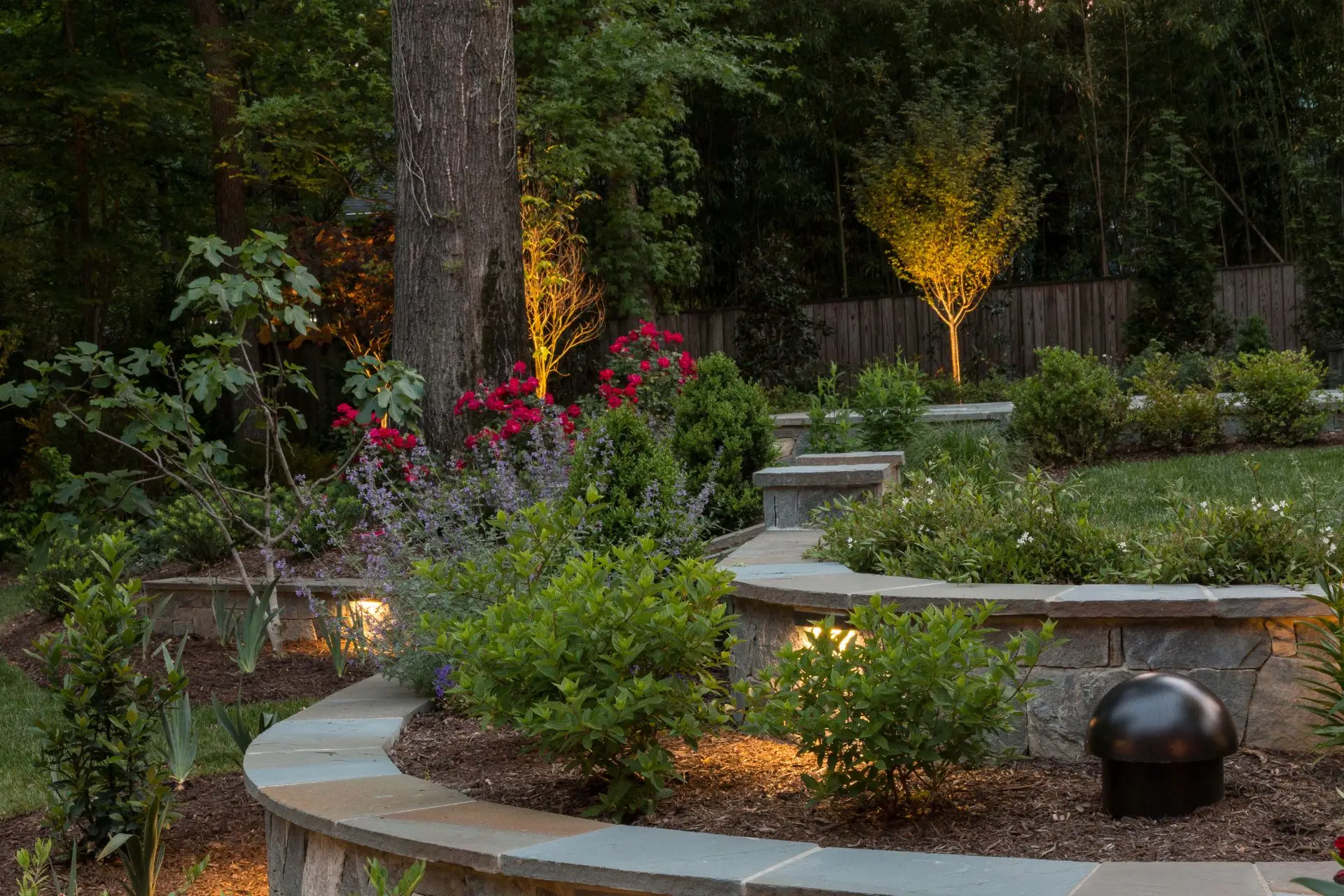
Trees become sculptural after dark when illuminated correctly. Uplighting at the base of a mature oak or flowering ornamental tree adds vertical drama and depth. Layered lighting at different intensities can create movement and dimension, especially in yards with varied plant heights.
Accent lighting also works beautifully with:
- Layered garden beds
- Sculptural shrubs
- Water features
- Stone retaining walls
By illuminating selective elements rather than everything at once, the landscape gains contrast and visual interest.
The Mistake We See Most: Uplighting Placed Too Close to the Tree Trunk
A common error is positioning uplighting directly at the base of a tree, pointing straight up. This creates harsh shadows on the trunk and makes the tree appear flat and one-dimensional rather than sculptural. The light blasts the bark instead of grazing it, losing the subtle texture and depth that makes uplighting effective.
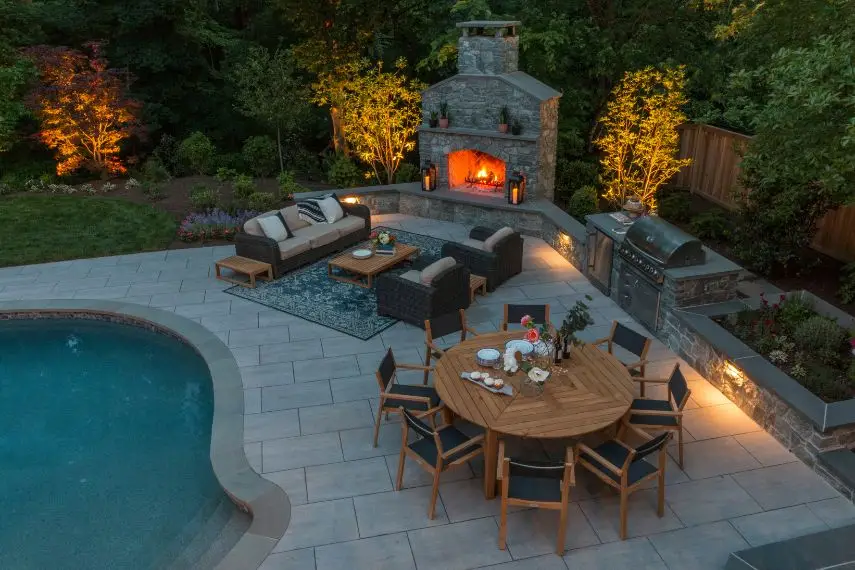
A McLean home has uplighting installed directly against mature maples. The result is unflattering, with harsh shadows and a washed-out appearance. We reposition the fixtures 3 – 5 feet away from the trunks, at a 45-degree angle. The trees immediately appear 3-dimensional, with light grazing the bark to reveal texture and create dramatic shadows. The entire landscape gains depth.
3. Showcase Architectural Features
Subtle wall washing techniques can highlight stone facades, columns, or textured siding. Bullet lights or carefully positioned flood lights emphasize focal points without creating glare inside the home.
- Deck and patio lighting should feel layered:
- Recessed stair lights for safety
- Soft overhead illumination for dining areas
- Low perimeter lighting to define edges
The result is an outdoor living space that feels intentional rather than temporary.
The Mistake We See Most: Visible Fixtures Creating Interior Glare
Many homeowners install landscape lighting without considering how it affects the interior view. Bright fixtures near the home’s perimeter become visible through windows and glass doors, creating glare that makes interior spaces feel exposed and uncomfortable. Rather than enhancing the home’s evening presence, the lighting actually diminishes the interior experience.
Picture a modern home with extensive glass doors, uplighting installed directly against the foundation, and bright overhead fixtures near the patio doors. At night, the interior became a fishbowl: bright, exposed, and uncomfortable for anyone sitting inside.
We repositioned all foundation lighting 8 – 10 feet away from the home and angled it away from windows. We replaced bright overhead fixtures with subtle deck perimeter lighting. Now, the interior feels private and calm while the exterior remains beautifully lit.
4. Conserve with Energy-Efficient and Smart Solutions
Modern landscape lighting systems rely on low-voltage infrastructure and LED fixtures that provide longevity and energy efficiency. LEDs consume significantly less energy than traditional incandescent bulbs and can last tens of thousands of hours, according to the U.S. Department of Energy.
Smart lighting controls allow homeowners to automate schedules, adjust brightness, and create seasonal scenes with ease. Solar lighting options can supplement wired systems in select areas, offering flexibility without sacrificing design integrity.
The Mistake We See Most: Over-Lighting Everything at Once
The most frequent error in overall lighting design is the impulse to illuminate every focal point simultaneously. A homeowner installs uplighting on every tree, wall washing on every architectural detail, and accent lighting on every shrub. The result feels like a stage set rather than a home—the landscape loses contrast and visual hierarchy, and shadows disappear entirely.
Imagine a Colonial home in Alexandria that had fixtures at every focal point: uplighting every tree, illuminating every shrub, washing every wall, even highlighting the mailbox. The property felt over-lit and artificial. We removed 40% of the fixtures and intensified the remaining ones on the home’s most distinctive features: the brick facade and front columns. The surrounding landscape receded into shadow, creating depth and drama. The home became a focal point rather than a lit-up billboard.
5. Design for Spring Evenings
Spring lighting should feel warm and welcoming. As trees leaf out and gardens begin to bloom, lighting can emphasize new growth and soften outdoor gathering spaces.
Consider:
- Adding uplighting to newly planted feature trees
- Installing deck lighting before outdoor entertaining season begins
- Adjusting timers to align with shifting sunset hours
When thoughtfully designed, landscape lighting makes evenings feel longer and more inviting.
The Mistake We See Most: Static Lighting for a Changing Landscape
Lighting is often installed once and forgotten, without accounting for seasonal changes. A lighting plan that looks perfect in May – when trees are leafing out and gardens are blooming – may feel inadequate by August when dense foliage blocks uplighting, or by winter when bare branches create entirely different shadows and sight lines.
Envision a home with mature maples. Uplighting installed in spring looked stunning at first. But by July, dense canopy blocked most of the light, making the investment feel wasted.
We adjusted the system to shift emphasis to lower plantings and architectural features during summer months, then return to tree uplighting in fall, when foliage thins. The homeowner now uses smart controls to adjust brightness and focus seasonally; this 10-minute adjustment happens just 4 times per year and keeps the landscape looking intentional.
Bringing It All Together
Landscape lighting is technical and artistic. It requires understanding how light interacts with surfaces, how shadows create depth, and how placement influences mood.
For homeowners in Alexandria and surrounding communities, a professionally designed lighting plan ensures your property looks intentional at every hour.
The right lighting does not overpower a landscape. It reveals it.
Need help finding the right landscape lighting profile? Try the quick quiz below to get started.
Stay Connected
Landscapes are always evolving. And so are the ways you can care for, enjoy, and elevate your outdoor spaces. When you follow Landed, you’ll receive thoughtful insights, seasonal guidance, design inspiration, and more. We share examples and tips you can apply: practical horticultural expertise, behind-the-scenes craftsmanship, and specific ideas to make your Northern Virginia landscape more beautiful, functional, and enduring.
Join us as we explore the art and care of outdoor living. It’s an easy way to stay inspired, informed, and connected to a team that’s committed to being your landscape partner for life.
Turn Inspiration into Action
When you’re ready to transform your outdoor space, our team is here.
From design to master planning, construction to long-term care, Landed provides a seamless partnership.