
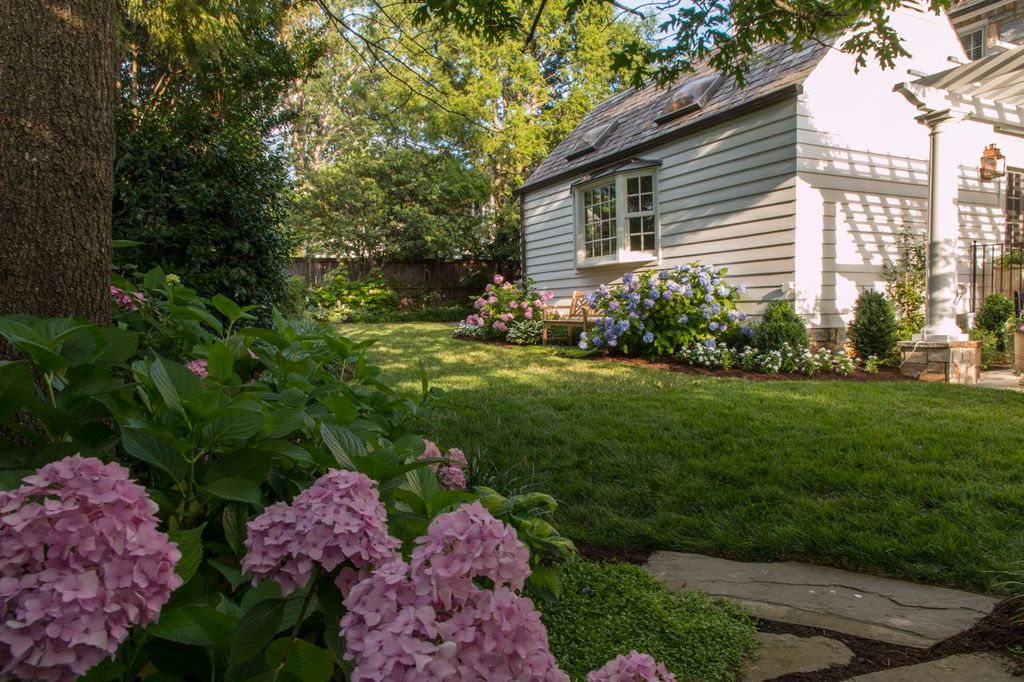
Beating Summer Lawn Issues: A Homeowner’s Guide to Northern Virginia Yards
|
Some of the most common summer lawn issues in Northern Virginia include fungal diseases like brown patch and dollar spot, aggressive warm-season weeds like crabgrass and nutsedge, and uneven or patchy growth caused by mixed cool and warm season grasses. Each problem looks similar on the surface (brown, thin, or struggling turf), but each requires a different response. Note: watering more (a common instinct) often makes matters worse.
This guide explains what’s actually happening beneath your feet. This isn’t a list of products to buy; it’s what homeowners need to know about their grass, its lifecycle, and how it should be approached during the summer months.
“My lawn has brown patches. Should I water more?”
This is one of the most important questions we address every summer.
And typically, the answer is no.
When homeowners see brown patches appearing in their lawn, the instinct is immediate: the grass must be thirsty. They turn up the sprinklers. Nothing improves. More water follows.
The patches spread.
What’s actually happening in many of these cases isn’t drought, but rather fungus.
Northern Virginia summers create near-ideal conditions for fungal lawn disease.
From June through August, our region delivers a pretty reliable combination of high heat and persistent humidity. And that’s precisely the type of environment that diseases like Brown Patch, Dollar Spot, and Summer Patch take hold.
Many types of lawn diseases can masquerade as thirsty grass to an untrained eye.
Here are some tips for recognizing the difference:
Drought Stress vs. Fungal Disease: A Quick Comparison
If you’re seeing brown patches and questioning whether to extend your watering timing, pause first. Look at the shape. Look at whether the brown areas have a definable edge or pattern. If they do, what you’re likely dealing with requires a fungicide, not irrigation.
Use this table to orient yourself before you adjust a single sprinkler head:
| Drought Stress | Fungal Disease | |
|---|---|---|
| Appearance | Grass blades fold or wilt; color fades to a dull gray-green before browning evenly | Distinct circular rings, irregular patches, or straw-colored spots with defined edges |
| Pattern | Spreads gradually and uniformly, often tracking sun exposure or gaps in irrigation coverage | Appears in shapes that don’t follow your watering pattern, such as circles, crescents, or rings |
| Response to watering | Color and texture improve within a day or two of adequate irrigation | Condition stays the same or worsens; additional moisture accelerates spread |
Under Northern Virginia summer conditions, fungal pressure builds quickly, and a lawn already under stress has less capacity to recover from a misdiagnosed treatment.
Catching the difference early is one of the highest-value things you can do for your turf between now and fall.
When in doubt, contact a lawn-care expert.
On the lawns we steward, fungal pressure is something we anticipate and monitor for throughout the season, not something we respond to after the fact. Our premiere lawn care maintenance service includes seasonal monitoring and targeted treatment as conditions shift.
“I have weeds taking over. What can I do now?”
Summer weeds in Northern Virginia are aggressive, and by June, they’ve had time to establish.
The good news: there are effective responses available right now, and the sooner you act, the more you can limit both the damage of this season and the seed bank that would make next year worse.
Pre-emergent herbicide, applied in early spring before soil temperatures rise above 55°F, is the most effective tool for preventing warm-season weeds from ever germinating. When included as part of a year-round care program, as on the properties we maintain, the majority of crabgrass and other invasive grasses simply never emerge.
For summer management, the approach depends on what’s growing.
Nutsedge
Nutsedge in particular is aggressive. It spreads through underground tubers and rhizomes, making hand-removal ineffective and requiring targeted herbicide treatment as early in the season as possible.
Crabgrass
Crabgrass, once established, will continue to spread and set seed until the first frost. Post-emergent treatments can slow it down, but they require the right product matched to the specific weed. And in summer heat, some treatments can stress the lawn further if applied carelessly.
What summer weeds ultimately reveal is the health of a lawn’s baseline. A thick, well-maintained turf is its own best defense against invasion. Weeds fill the gaps that thin grass and compacted soil leave behind.
Addressing weed pressure now, and reinforcing the lawn in fall with aeration and overseeding, builds the density that crowds out invaders before they arrive next year.
“Why is my lawn greening up unevenly (or barely greening up at all)?”
Northern Virginia sits in what turf scientists call the transition zone: a band of climate where summers are too hot for cool-season grasses to thrive without stress, and winters are too cold for warm-season grasses to stay green year-round. So neither category has it easy here.
And many of the lawns around Alexandria, Arlington, and other Virginia cities have both types growing in the same yard. Sometimes, this is by design, but often, it happens through years of accumulated overseeding with mismatched varieties.
Understanding which type of grass you have, or which mix you’re managing, changes everything about how you interpret what you see.
Tall Fescue
This is the dominant cool-season grass in our region, and the variety we work with most on the properties we maintain. It greens up early in spring, stays relatively active through summer with adequate water, and holds its color well into fall. When it goes brown in summer, heat and drought stress are usually the cause.
Bermuda Grass
Bermuda grass is one of the most common warm-season options in Virginia, and it follows a different calendar entirely. It goes dormant in winter and doesn’t fully green up until late spring or early summer, when soil temperatures have climbed consistently above 65°F.
A Bermuda lawn in May can look brown and lifeless compared to a neighbor’s fescue, but in June, it should be hitting its stride. If a Bermuda area still looks thin or uneven in mid-June, don’t panic. Heat and water are the levers to pull first.
Lawns with a mix of cool and warm season grasses can be more complicated, but they are an increasingly common situation on Northern Virginia properties. Cool-season areas green up early and may begin to show summer stress just as the warm-season patches begin hitting their stride.
The result can be a lawn that looks inconsistent for much of the year: some sections deep green, others brown, with no obvious explanation. This isn’t a sign that something is catastrophically wrong. But it is a useful signal: a longer-term plan that addresses the grass composition itself could produce a lawn that looks and performs consistently across every season.
The most important thing a homeowner can do in this situation is know what they’re managing. If you’re not sure whether you have fescue, Bermuda, or a mix, our lawn care guide can help you identify what’s growing and what it needs.
How to Water Your Northern Virginia Lawn in Summer (Without Making Things Worse)
Given how much damage overwatering can do, here’s what sound summer irrigation actually looks like in Northern Virginia:
Water Deeply, Not Frequently
Shallow daily watering trains roots to stay near the surface, where summer heat does the most damage. Instead, water deeply one to two times per week, applying enough to reach 2 to 3 inches into the soil. This encourages roots to grow downward, where soil temperatures are cooler and moisture lasts longer.
Water in the Early Morning
Timing matters more than most homeowners realize. Early morning irrigation (ideally before 9AM) gives the turf time to dry out through the day. Evening watering leaves the canopy wet overnight, which is precisely the condition that accelerates the fungal issues described above. This single adjustment can meaningfully reduce disease pressure across a summer.
Check the Soil Before Running the System
One of the most common summer lawn issues we see is irrigation running on a fixed schedule regardless of what the soil actually needs. Before watering, push a screwdriver six inches into the ground. If it slides in without resistance, the soil has adequate moisture. If it meets firm resistance, it’s time to irrigate.
A smart irrigation controller that adjusts for rainfall and temperature can take the guesswork out entirely, and prevent the kind of well-intentioned overwatering that turns a manageable situation into a significant one.
When in doubt, less is often more. The goal is consistent, deep moisture, and not a lawn that’s perpetually wet.
Mowing Height Matters More in Summer
Many don’t realize that the most common summer lawn issues in Northern Virginia aren’t caused by disease, drought, or weeds. They’re caused by a lawnmower set too low.
Tall fescue should be kept at 3.5 to 4 inches in length throughout the summer months. That extra height isn’t cosmetic. Longer blades shade the soil beneath them, keeping root-zone temperatures lower and slowing the moisture loss that leads to heat stress.
When a lawn gets cut too short in July, the consequences compound quickly:
- Exposed soil heats up faster and dries out sooner
- Shallow root systems have less buffer against drought stress
- Weakened turf becomes more vulnerable to the fungal diseases that thrive in our summer humidity
The fix is straightforward: raise the mowing deck before summer arrives and leave it there. Resist the temptation to cut short in hopes of stretching time between mows. The tradeoff isn’t worth it.
A Note on Fertilizing Cool-Season Grasses in Summer
Speaking of tall fescue, also resist the urge to fertilize during July and August. High-nitrogen fertilizer applied in peak summer heat pushes a flush of tender new growth that’s especially vulnerable to fungal disease and heat stress, compounding the very problems this season already creates.
Fescue’s natural rhythm works against you here: it’s not actively building strength in summer; it’s surviving.
Fall is the right window for fertilization, when cooler temperatures let the grass absorb nutrients and thicken before winter.
What Summer Asks of a Well-kept Lawn and Its Stewards
As you can see, summer in Northern Virginia is not a maintenance season. It’s a stress season.
The lawns that come through looking their best are the ones with the right care program behind them:
- Treatments that thicken the turf
- Applications that close the door on weeds
- Monitoring that catches disease before it spreads
For the properties in our care, we watch the land closely in summer: monitoring for early signs of disease, adjusting watering schedules as conditions shift, applying targeted treatment when fungal pressure rises.
We know what’s growing where, and what each section of turf needs at each point in the season, because that kind of attentiveness is what separates a lawn that recovers from one that struggles all the way to fall.
If your lawn is showing signs of struggle this summer and you’d like a partner who can make sense of it and begin building toward a more beautiful yard next year, let’s connect. Landed serves homeowners across Northern Virginia who want a landscape partner, not just a service call.
Learn more about our lawn and garden maintenance program at LandedLandscapes.com.
Landed is a full-service luxury outdoor living company rooted in Alexandria, VA. We craft, build, and care for exceptional outdoor spaces across Northern Virginia. With Landed, the best outdoor space is yours®
Frequently Asked Questions
Why does my lawn have brown patches in summer?
Brown patches in summer are most often caused by fungal diseases like Brown Patch, Dollar Spot, or Summer Patch, not drought. These diseases thrive in Northern Virginia’s heat and humidity and appear in distinct circular or irregular shapes. Applying more water typically accelerates the problem. If patches have a defined edge or pattern, a fungicide application is usually the correct response.
Should I water more if my lawn looks stressed in summer?
Not necessarily. Drought stress appears gradually and uniformly, while fungal disease creates defined patches that worsen with added moisture. Before increasing irrigation, examine the shape and spread of any brown areas. Overwatering a fungus-affected lawn can make the problem significantly worse. When in doubt, consult a lawn care professional before adjusting your watering schedule.
What summer weeds are most common in Northern Virginia lawns?
Crabgrass and nutsedge are the most aggressive summer weeds in Northern Virginia. Crabgrass spreads and sets seed until the first frost; nutsedge spreads through underground tubers, making hand-pulling ineffective. Post-emergent herbicides can help, but product selection matters. A thick, well-maintained lawn is the most reliable long-term defense against warm-season weed pressure.
Why is my lawn greening up unevenly in summer?
Uneven greening is often caused by a mix of cool-season and warm-season grasses growing in the same yard. Tall fescue greens up early but can stress in summer heat, while Bermuda grass doesn’t fully green until soil temperatures consistently exceed 65°F. Sections can look dramatically different at the same time of year, depending on which grass type dominates each area.
Is summer a good time to treat lawn problems in Northern Virginia?
Summer is a stress season, not an ideal treatment window for everything. But acting on active weed and disease pressure is still worthwhile. Fungicide applications can stop fungal spread, and post-emergent herbicides can slow established weeds. The most impactful recovery work, including aeration and overseeding, is best scheduled for fall when cool-season grasses respond most effectively.
When should I call a lawn care professional about summer lawn issues?
If brown patches are spreading despite normal watering, weeds are outpacing your treatments, or large sections of turf are failing to green up by mid-summer, it’s time to bring in a professional. Early intervention prevents small problems from compounding through the season and sets the lawn up for stronger recovery when fall care begins.
Stay Connected
Landscapes are always evolving. And so are the ways you can care for, enjoy, and elevate your outdoor spaces. When you follow Landed, you’ll receive thoughtful insights, seasonal guidance, design inspiration, and more. We share examples and tips you can apply: practical horticultural expertise, behind-the-scenes craftsmanship, and specific ideas to make your Northern Virginia landscape more beautiful, functional, and enduring.
Join us as we explore the art and care of outdoor living. It’s an easy way to stay inspired, informed, and connected to a team that’s committed to being your landscape partner for life.
Turn Inspiration into Action
When you’re ready to transform your outdoor space, our team is here.
From design to master planning, construction to long-term care, Landed provides a seamless partnership.