
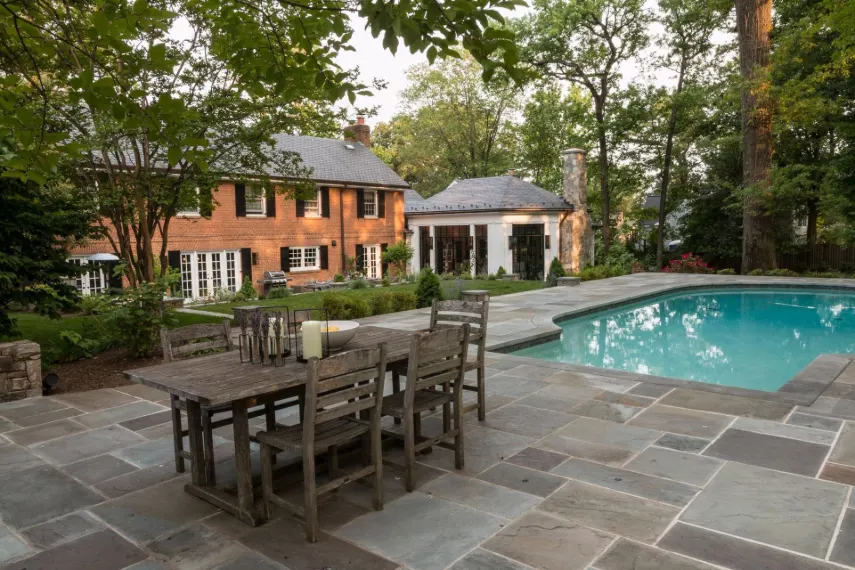
Get Ahead of 2027’s Hottest Outdoor Living Trends
|
What would it take for your backyard to feel as finished as the rest of your home? It’s the question driving many of today’s top outdoor-living trends, and the answers are worth planning for as 2027 approaches. Imagine a backyard that invites you to linger from first light to late-night at fireside—a collection of luxurious spaces that feel meaningful to you and connected under a unified design vision. That’s where outdoor living is heading for Northern Virginia homeowners. Let’s explore what’s on the horizon:
The biggest shift in outdoor design for 2026 was livability. Backyards are being planned as connected, functional extensions of the home, with covered living spaces, cooking zones, and dining areas working together as one environment, accented and defined by thoughtfully planted landscapes. For Alexandria and Northern Virginia homeowners, that means thinking not only about the outdoor living features you want, but also about how those individual features will work together.
If you are planning an outdoor project and want to know what’s worth doing, what features and designs signal the luxury tier you’re after, and what the local design picture looks like as we head into 2027, this post is for you.
Key Takeaways
- The strongest 2026 outdoor projects focused on how hardscapes, poolscapes, covered living spaces, and cooking and dining zones can connect with the surrounding landscape to form one coherent environment.
- Screened porch and open deck combinations are consistently noted among the most-requested project types for Northern Virginia builders heading into 2027, driven by local pest pressure and variable summer weather.
- Low-maintenance landscaping in 2026 meant thoughtful native and resilient planting, not replacing greenery with hardscape.
- At the luxury tier, the premium is in design coherence and comfort systems—not simply in the number of amenities installed. Think automated screens, integrated heating, layered lighting, and more.
- Evening usability is now a design requirement. Layered lighting plans that balance safety and atmosphere are standard in well-designed outdoor spaces.
- Looking ahead to 2027, the luxury-tier ideas worth watching include solid-roof pavilions, dedicated wellness zones, and water features planned as part of a larger poolscape.
Why Is “Livability” the Defining Outdoor-Design Idea Heading into 2027?
Outdoor spaces used to be designed around a single anchor, like the patio, pool, or grill. Homeowners are now planning backyards the way they plan interior rooms, with distinct zones for different activities and a deliberate flow between them.
Houzz survey data says that among outdoor-renovating homeowners, 83% included lounge or seating areas, 55% included dining areas, and 53% included quiet retreats or reading areas. It’s a clear signal that people want their outdoor space to do more than one thing.
For Northern Virginia properties, where home lots are often more compact and privacy is a real consideration, intentional zoning matters even more. A well-planned 400-square-foot outdoor space with a covered lounge, a defined dining area, and a planted border will feel more useful and more finished than a larger patio with no clear organization.
The strongest projects in 2027 will not be defined by by any single feature, but by how the features connect.
What Outdoor “Rooms” Are Northern Virginia Homeowners Planning?
Evidence level: Strong homeowner survey support (Houzz) + local builder consensus
An organized backyard breaks into connected zones:
- Lounge or seating area
- Dining areas
- Cooking spaces
- Somewhere quieter to step away
Modular seating and flexible layouts are designed to ensure that the same space handles a Tuesday evening with the family as well as a Saturday gathering with guests.
One local signal worth noting is that as we move toward the close of 2026, Northern Virginia builders consistently mention screened porch and open deck combinations as among the most-requested project types. A protected outdoor living room connects to an open-air deck for grilling and sun exposure. Higher-end versions add recessed heaters and integrated lighting and media.
Multilevel layouts are another distinct trend in Northern Virginia. A raised dining deck steps down through a landing to a lower stone patio or fire area, with each level serving a clear purpose. Multi-level deck design and construction in Alexandria is one of the more common project types we see in this area, and the planning logic is the same: every level needs a reason to exist.
Something to keep in mind: the local builder reports are market signals from designers describing their own project pipelines. They’re useful, but they don’t represent a survey of all Northern Virginia homeowners. At Landed, we’ve always enjoyed and embraced the wide array of outdoor-living visions our clients bring to the table.
Why Are Covered and Screened Structures Becoming a Centerpiece of Backyard Design?
Evidence level: Local designer consensus + national industry reporting
A pergola used to be a finishing touch. But as we head into 2027, covered and screened structures are increasingly cropping up as a starting point of designs rather than the last item on the budget.
And for very good reason. Seasonal insects and unpredictable summer weather can make an unprotected patio genuinely uncomfortable for a significant portion of the year. A screened space solves that problem; a screened, solid-roof pavilion solves it even more completely.
At the luxury tier, the shift is from decorative shade toward dependable, adaptable cover. Local designers describe a move toward solid-roof pavilions with automated screens and infrared heaters. Retractable roofs and app-controlled comfort features are increasingly incorporated into the structure from the beginning, not added as afterthoughts.
If you’re early in your planning process, explore covered pergola and pavilion design ideas to learn and plan for how these structures get integrated into a full outdoor environment.
How Are Outdoor Kitchens Evolving from Grill Stations to Hosting Environments?
Evidence level: Homeowner survey baseline (Houzz) + luxury-tier designer reporting
Houzz data shows that 48% of outdoor-renovating homeowners included an outdoor cooking area in recent projects. That’s a broad category covering everything from a built-in grill to a full outdoor kitchen setup.
One way to step toward luxury is to support different types of entertaining. Local luxury designers report requests for pizza ovens, teppanyaki grills, and climate-controlled wine storage, with layouts designed to handle both an everyday family dinner and a catered event without reorganizing the space.
Built-in bars and dedicated dining areas paired with the cooking zone are part of the same logic. The goal is a space that works as hosting infrastructure, not a standalone grill that happens to be outside.
For practical ideas on how cooking and dining areas can work alongside a pool, read more about backyard outdoor kitchen and pool ideas for Northern Virginia.
Just a note of clarification: elaborate kitchen setups are a high-end designer trend. The Houzz data confirms that outdoor cooking areas are common. It doesn’t confirm that most homeowners are installing pizza ovens. You do you.
What Does “Low-Maintenance Landscaping” Mean for Northern Virginia Yards this Year?
Evidence level: Strong homeowner survey support (Houzz) + local firm consensus
The Houzz numbers here are clear:
- 73% of outdoor-renovating homeowners selected low-maintenance plants
- 55% chose native varieties
- 56% chose pollinator-friendly plants
- 49% chose drought-resistant plants.
What that doesn’t mean is replacing everything with gravel and hardscape. Going into 2027, the definition of low-maintenance is thoughtful planting: plants that suit local conditions and look intentional rather than sparse.
Northern Virginia firms frame native and resilient planting as part of a polished outdoor environment, not a separate “sustainability feature” bolted onto the design. Meadow-style areas and water-wise irrigation sit alongside substantial hardscape rather than competing with it.
(If you’re weighing plant choices for a Virginia property, learn about native vs. non-native plants for your Virginia landscape to explore the practical tradeoffs in detail.)
How Is Evening Usability Changing the Way Outdoor Lighting Gets Designed?
Evidence level: Local firm consensus + national industry reporting
Outdoor lighting no longer means path lights and a string of bulbs over the patio. The 2027 approach will be more layered, with step lights, downlighting from overhead structures, and focal-point lighting for plantings or water features, all working together to make the space usable after dark without flooding the yard with light.
In Alexandria and Northern Virginia, homeowners seek “twilight” lighting plans that address distinct functions, including circulation, safety, ambient lighting, and accent lighting. The goal is a space that feels finished at 9pm, not just 4 pm.
App-controlled systems and integrated heating and media setups are increasingly part of the same plan, built into the structure rather than added later. For a deeper look at how this comes together, study designing outdoor lighting for evenings worth savoring.
What Does the Wellness Trend Look Like in a Northern Virginia Backyard?
Evidence level: Emerging luxury-tier signal + accessible practical version
The wellness trend relates to a wide range of outdoor-living trends. At the aspirational end, we have dedicated saunas, cold plunges, and outdoor showers. Meaningful developments include both specific features as well as the planning approach, where wellness gets a designated zone rather than being squeezed into leftover space.
One trend that’s particularly relevant to Alexandria’s denser neighborhoods is the secluded seating area with a calming water feature. Compact fountains and small cascades are especially desirable for their ability to mask neighborhood noise. This is a simple, space-efficient area in your own yard that feels like a private retreat.
Industry reports frame this concept as a “micro-resort.” To us, it’s all about your very best outdoor space.
How Will Pools Fit into the 2027 Outdoor Living Picture?
Evidence level: Luxury-tier designer reporting + national landscape professional data
At the upper end of the market, pools are being designed as part of a coordinated poolscape, with lounging shelves, integrated fire features, and adjacent pavilions or covered structures, all planned together. Northern Virginia luxury designers specifically highlight negative edges and fire-and-water combinations as part of this approach.
For those with smaller yards or simpler goals, a large pool is not a requirement. A well-designed smaller water feature can serve the same atmospheric purpose at a fraction of the cost and maintenance commitment.
Whatever the water feature, the trend points toward an experience that integrates with the surrounding space. A pool that sits in an otherwise unplanned yard is a different product than a pool that anchors a full outdoor environment. Learn more about custom pool and landscape design in Alexandria to explore how that integration works in practice.
What Materials and Palettes Will Define the Look of Outdoor Spaces in 2027?
Evidence level: National industry reporting (multiple sources)
The cool-gray palette that dominated outdoor design for the past decade is giving way to warmer tones of sandy beige, warm brown, and taupe. These colors read as softer and more connected to the surrounding landscape than the uniformly gray schemes they’re replacing.
Material choices follow the same direction, with natural stone, wood tones, and textured paving. The emphasis is on materials that look better as they age, rather than materials that look perfect when first installed and then require constant maintenance to stay that way.
At the luxury tier, architecture carries more of the design work. Sculptural retaining walls and layered terracing become part of the composition. Aligning the outdoor kitchen and dining areas with the home’s interior layout is a consistent marker of high-end projects—both in material selection and in how the spaces feel like a continuation of the house rather than a separate addition.
| Trend | What Most Homeowners Used to Do | What Northern Virginia Luxury Projects Look Like |
|---|---|---|
| Outdoor rooms | Lounge, dining, and retreat zones on one patio | Connected zones across multiple levels with defined transitions |
| Covered structures | Pergola or basic covered patio | Solid-roof pavilion with automated screens, infrared heat, integrated sound |
| Outdoor kitchen | Built-in grill with counter space | Pizza oven, teppanyaki, wine storage, butler’s pantry for catered events |
| Landscaping | Low-maintenance and native plants | Meadow-style plantings, water-wise irrigation, restrained compositions alongside hardscape |
| Lighting | Path lights and string lights | Layered twilight plans: circulation, ambient, and accent lighting controlled by app |
| Wellness | Secluded seating area, small water feature | Dedicated sauna, cold plunge, yoga deck, or meditation garden zone |
| Pool | N/A for most projects | Poolscape with tanning shelf, fire feature, smart lighting, adjacent pavilion |
What Does a Well-Connected Outdoor Project Look Like in Northern Virginia?
The strongest regional story is protected, connected outdoor living. This could mean a covered and/or screened living space that links to an open cooking deck, which steps down to a lower patio or garden that may include a fire area or pool zone, with lighting and comfort systems planned from the start.
Luxury expression in this context is about how naturally those spaces work together. A backyard with 5 disconnected features is less valuable—and less enjoyable—than one with 3 features that flow naturally together. It’s no longer about the numbers, but the cohesion.
If you’re heading into a design conversation for a 2027 project, the most useful questions to bring are:
- How do I want to move through this space?
- What time of day and what season do I most want to use it?
- And where do I want to feel like I can stop and stay a while?
The answers to those questions should drive the design.
Landed works with homeowners across Alexandria and Northern Virginia on exactly this kind of connected outdoor design. If you’re planning a project for 2027, reach out to start the conversation.
Stay Connected
Landscapes are always evolving. And so are the ways you can care for, enjoy, and elevate your outdoor spaces. When you follow Landed, you’ll receive thoughtful insights, seasonal guidance, design inspiration, and more. We share examples and tips you can apply: practical horticultural expertise, behind-the-scenes craftsmanship, and specific ideas to make your Northern Virginia landscape more beautiful, functional, and enduring.
Join us as we explore the art and care of outdoor living. It’s an easy way to stay inspired, informed, and connected to a team that’s committed to being your landscape partner for life.
Turn Inspiration into Action
When you’re ready to transform your outdoor space, our team is here.
From design to master planning, construction to long-term care, Landed provides a seamless partnership.