
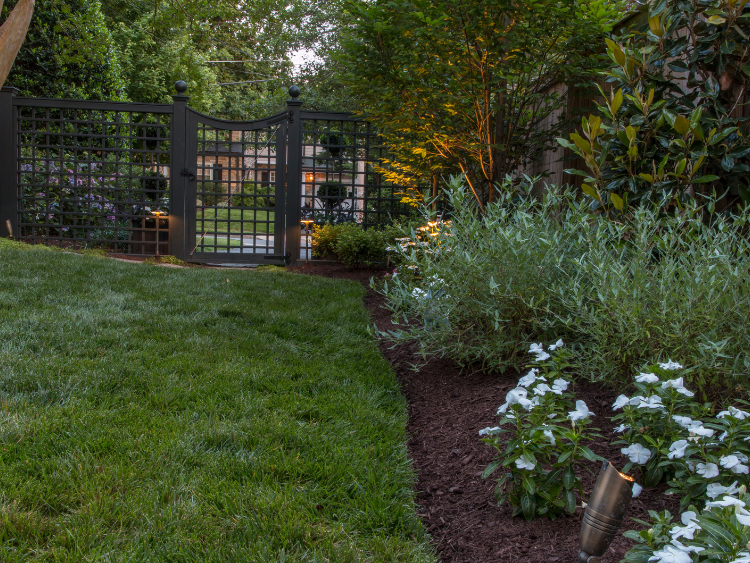
Caring for Your Lawn as Temperatures Cool
|
As the season turns and temperatures ease, caring for your lawn becomes an act of intention. It means aerating and overseeding, feeding with a fall fertilizer, and gently lowering your mowing height over the last few cuts. It means watering according to a very thoughtful and intentional schedule, and clearing leaves before they settle in and mat down. In Northern Virginia, the window for aerating and overseeding runs from September through mid-October—a brief stretch of the year when the work you put in pays off for seasons to come. What you do now shapes whether your lawn returns thick and lush in spring, or thin and patchy.
Key Takeaways
- Fall is one of the best times to give your lawn some attention. Even as the grass starts growing more slowly, the roots are still active, making it a great time to aerate, overseed, and fertilize.
- Aerate before you overseed: the two work as a system, and doing them in sequence dramatically improves seed germination and soil health.
- Water in the early morning, not evening, as temperatures cool. Evening watering in cool, damp conditions is a primary driver of lawn fungal disease.
- Don’t let leaves sit: a thick leaf layer through fall and winter raises snow mold risk and attracts burrowing rodents that damage turf roots.
- The aeration and overseeding period in Northern Virginia is narrow (typically September through mid-October), so schedule your professional service early.
Why is fall the most important season for your lawn?
Cool-season grasses (the dominant turf type across Northern Virginia) actually accelerate root development as air temperatures drop. The grass you see slowing down above ground is quietly pushing roots deeper below it, storing energy for spring. That’s why the work you put into your lawn in the fall can make such a big difference.
The critical threshold to understand is that fescue and Kentucky bluegrass, and other cool-season grasses stop active growth when daytime highs consistently fall below 50°F, which in this region typically happens in late October or early November. That means your effective action timeframe (the period when seed germinates, roots respond to treatment, and fertilizer is absorbed efficiently) runs roughly from early September through mid-October. If you miss it, you’re waiting until spring.
Think of cooler mornings as a starting gun. Explore our 20 tips for keeping your lawn healthy this fall for a broader look at everything the season demands.
Should you aerate and overseed your lawn in the fall?
In Northern Virginia, heavy clay soil easily becomes compacted under the weight of foot traffic, lawn mowers, and intense summer heat. When soil particles pack tightly together, oxygen, water, and nutrients struggle to reach root systems, leaving grass weak and prone to thinning.
Core aeration opens up the ground by pulling thousands of small soil plugs (typically two to four inches deep) across the yard in a crisscross pattern. Leaving those extracted cores on the surface lets them naturally break down over a few weeks, returning valuable organic matter and helping regulate soil temperature and moisture.
At the same time, this process keeps heavy thatch layers under control over time. Regular core aeration also prevents excessive thatch buildup, making room for essential resources to penetrate deeper.
Overseeding right after aeration takes advantage of those newly created channels. Fresh grass seed can fall directly into the soil that it needs to contact in order to germinate. Pairing the two can help produce a thicker lawn that crowds out weeds and holds up better against drought and disease.
These two services are most powerful when done in sequence, not separately. Landed’s aeration and overseeding service handles both as a coordinated system, timed specifically for Northern Virginia’s fall season.
How should you mow, water, and fertilize as it gets cooler?
Mowing
Gradually lower your mowing height for the final cuts of the season, targeting around 2 to 2.5 inches. Slightly shorter turf heading into winter reduces snow mold risk by improving airflow at the soil surface. Avoid scalping, as cutting too aggressively stresses grass that’s already preparing for dormancy.
Watering
As evaporation slows with cooler air, your lawn needs less frequent watering. More important than frequency is timing, which means water in the morning and/or early afternoon rather than the evening. Evening watering leaves turf wet overnight in cool, humid conditions, which is exactly the environment where fungal disease takes hold. Early watering allows the grass to dry before temperatures drop after sunset.
As daytime highs consistently stay below 50°F and the grass approaches dormancy, you can reduce watering further and eventually stop until spring.
Fertilizing
A late-season “winterizer” fertilizer application is an often overlooked fall investment. Applied in late October or early November, it feeds the root system during its final active growth phase, building carbohydrate reserves that fuel faster green-up in spring. This is not the same as a summer feeding, as the formulation and timing are specific to the dormancy transition.
For a deeper look at the full seasonal routine, see our ultimate guide to fall lawn care.
Fall Lawn Care Task Timeline for Northern Virginia
| Task | Best Timing (Northern VA) | Why It Matters | DIY or Pro? |
|---|---|---|---|
| Core Aeration | September | Relieves clay compaction; opens soil for seed and nutrients | Pro recommended |
| Overseeding | Immediately after aeration | Seed falls into holes for maximum germination contact | Pro recommended |
| Winterizer Fertilization | Late October, early November | Builds root reserves for spring green-up | Pro preferred |
| Mowing Height Reduction | Final 2 – 3 cuts of season | Reduces snow mold risk heading into winter | Pro or DIY |
| Early Watering Adjustment | September onward | Prevents fungal disease in cool, damp conditions | DIY |
| Leaf Removal | October, November (ongoing) | Prevents smothering, snow mold, and rodent habitat | Pro for heavy cover |
| Irrigation Winterization | Before first hard freeze | Prevents pipe and head damage | Pro required |
Should you rake or mulch fall leaves?
Raking leaves feels like a chore, but skipping it feels like a shortcut. Plus, a thick layer of leaves left on your lawn through fall and winter can raise snow mold risk and create habitat for burrowing rodents (voles, mice, and shrews) that tunnel through turf and damage root systems.
Thankfully, leaf management doesn’t equate to bagging every leaf. Thin layers of leaves can be mulched directly into the turf with a mower, returning nutrients to the soil as they decompose.
The rule of thumb: if you can still see the grass through the leaf layer after mulching, you’re in good shape. If leaves are accumulating faster than you can mulch them (common on properties with heavy tree cover), removal is the right call.
Leaf Management: Mulching vs. Removal
| Scenario | Recommended Approach | Risk if Ignored |
|---|---|---|
| Light, scattered leaf cover | Mulch with mower (shred finely) | Minimal if managed regularly |
| Moderate cover, visible turf after mulching | Mulch in passes; remove excess | Smothering risk if left too long |
| Heavy accumulation or large leaves | Remove entirely | Snow mold, turf suffocation, rodent habitat |
| Wet, matted leaves | Remove immediately | Accelerated disease and turf damage |
For properties with significant tree coverage, professional leaf removal is often the most practical way to stay ahead of accumulation without losing time for other fall tasks.
What fall lawn services should you book with a pro?
Here’s what to confirm with your lawn care provider before the season closes:
- Aeration and overseeding, September through mid-October, in order
- Leaf removal, Ongoing through November, scaled to tree cover
- Winterizer fertilization, Late October to early November, after top growth has slowed
- Irrigation winterization, Before the first hard freeze, to protect your system
The aeration and overseeding window is the most time-sensitive item on this list. Once daytime temperatures consistently drop below 50°F, new seed won’t germinate effectively, and compacted soil won’t respond as well to treatment. Scheduling late means waiting until next fall for another opportunity.
With our Premier Maintenance Package, Landed handles the sequencing so nothing gets missed and nothing gets done out of order. Explore Landed’s full lawn care and maintenance programs to see how fall services fit into a year-round approach.
Frequently Asked Questions
When should I aerate my lawn in Northern Virginia?
The ideal timeframe for core aeration in Northern Virginia is early to mid-September through mid-October. Aerating during this period gives cool-season grasses time to recover and fill in the holes before temperatures drop below the active growth threshold. Scheduling early also ensures you can overseed immediately after aeration, while germination conditions are still favorable.
Should I overseed in the fall or wait until spring?
Fall is strongly preferred for overseeding cool-season lawns in Northern Virginia. Cooler temperatures and increased moisture create ideal germination conditions, and new seedlings have the entire winter to establish roots before facing summer heat and drought. Spring overseeding is possible but puts young grass under stress sooner.
Should I bag leaves or mulch them into my lawn?
It depends on the volume. Light leaf cover can be mulched with a mower, as shredded finely, thin layers decompose quickly and return nutrients to the soil. Heavy accumulations should be removed. A thick, matted leaf layer left through winter raises snow mold risk and provides cover for burrowing rodents that damage turf.
When does grass stop growing in fall, and should I keep watering?
Cool-season grasses like tall and fine fescue stop active growth when daytime highs consistently fall below 50°F, typically late October or early November in this region. Reduce watering frequency as temperatures cool, and stop regular irrigation once the grass approaches full dormancy. Always water in the morning or early afternoon to reduce disease risk.
How do I prevent lawn fungus as temperatures cool?
The most effective preventive step is shifting watering to early in the day. Evening watering leaves turf wet overnight in cool, damp conditions, the primary environment where fungal diseases like snow mold develop. Keeping your final mowing height around 2 to 2.5 inches also improves airflow at the soil surface and reduces disease pressure heading into winter.
Stay Connected
Landscapes are always evolving. And so are the ways you can care for, enjoy, and elevate your outdoor spaces. When you follow Landed, you’ll receive thoughtful insights, seasonal guidance, design inspiration, and more. We share examples and tips you can apply: practical horticultural expertise, behind-the-scenes craftsmanship, and specific ideas to make your Northern Virginia landscape more beautiful, functional, and enduring.
Join us as we explore the art and care of outdoor living. It’s an easy way to stay inspired, informed, and connected to a team that’s committed to being your landscape partner for life.
Turn Inspiration into Action
When you’re ready to transform your outdoor space, our team is here.
From design to master planning, construction to long-term care, Landed provides a seamless partnership.